Nutraceuticals

Vitamin K: The Essential Micronutrient for Bones, Heart, and Longevity

Vitamin K - Diamond Nutraceutical

Vitamin K is not a single substance, but a family of fat-soluble molecules sharing the same chemical structure (2-methyl-1,4-naphthoquinone). Its discovery is credited to a Danish scientist who named it with the letter "K" in reference to its ability to promote blood coagulation (Koagulation in Danish).

Today we know that its role goes far beyond coagulation. This micronutrient is primarily classified into two forms:

  • Vitamin K1 (Phylloquinone): Abundant in green leafy vegetables.
  • Vitamin K2 (Menaquinone): Produced by bacterial fermentation (fermented foods) and by our intestinal microbiota.

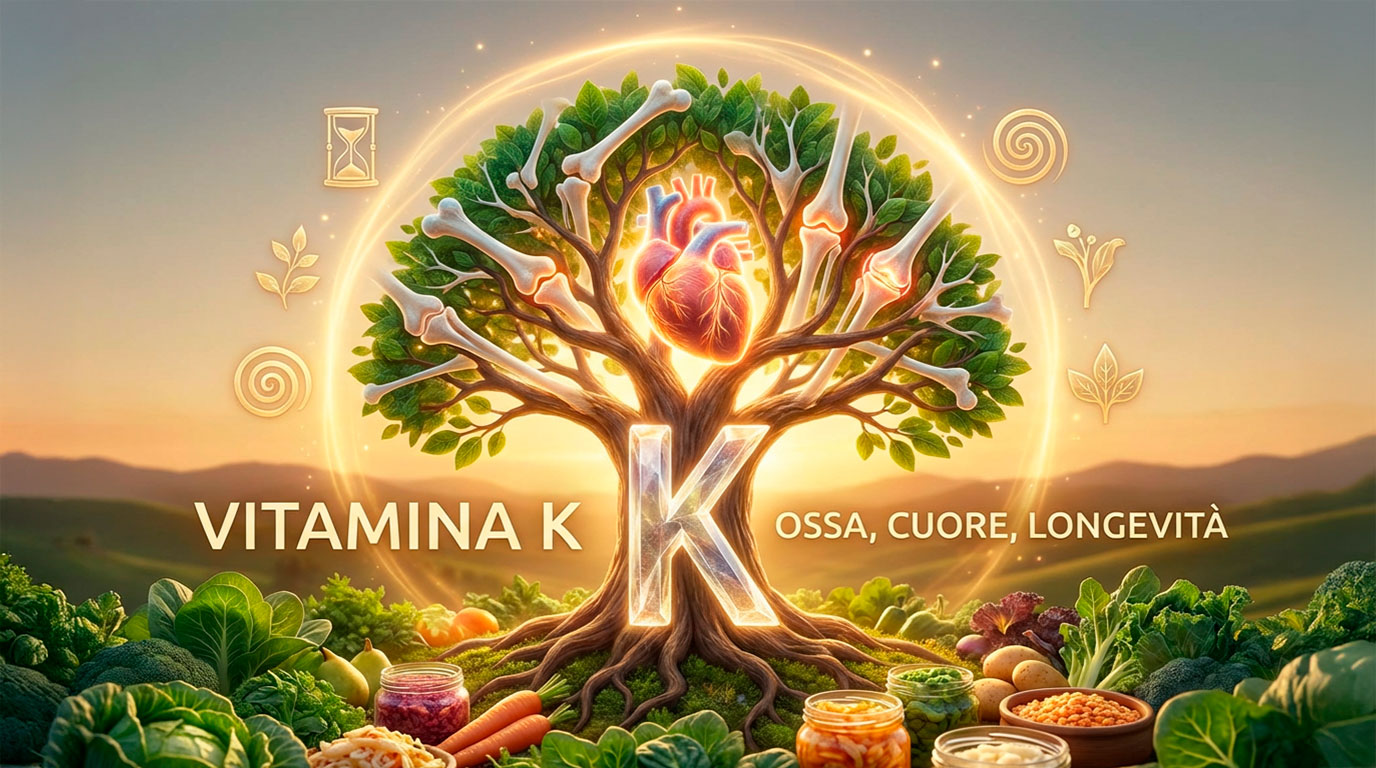
Modern research has elevated Vitamin K to the status of a key nutrient for healthy aging, highlighting its crucial impact on bone density, cardiovascular protection, and cognitive functions.

Benefits for Bones, Heart, and Brain

Vitamin K's contribution to systemic health is vast. It is essential for the activation (carboxylation) of osteocalcin, a protein necessary for binding calcium in bones and ensuring proper mineral density, counteracting skeletal fragility.

At the same time, clinical studies and meta-analyses have highlighted a significant association between low levels of phylloquinone (K1) and an increased risk of all-cause mortality, suggesting a protective effect on the cardiovascular system. No less important is its neurological impact: adequate intake of foods rich in K1 and K2 appears to support cognitive function in the elderly, acting as a neuroprotector during aging.

The Link with Intestinal Microbiota and Absorption

Vitamin K plays an interesting role in gut health, acting against dysbiosis (microbial imbalance), one of the hallmarks of biological aging. A bidirectional relationship exists:

  1. The vitamin can act as a growth factor for beneficial bacteria.
  2. Healthy intestinal bacteria synthesize menaquinones (K2).

However, the human body retains only about 30% of ingested Vitamin K, metabolizing and excreting it rapidly. This explains why blood levels are often low. Recent studies, using labeled isotopes, have shown that the microbiota is able to reshape the structure of Vitamin K, directly influencing the host's nutritional status. Although research is still in its early stages, supplementation could prove to be a useful strategy for maintaining optimal levels.


The Powerful Synergy Between Vitamin D and Vitamin K

To maximize longevity benefits, Vitamin K should not act alone. There is a strong synergy with Vitamin D. A prospective clinical study of over 4,700 people revealed that combined deficiency of both vitamins (found in 20% of participants) is correlated with a higher mortality rate.

Furthermore, research on animal models indicates that combined intake preserves bone integrity much more effectively than intake of individual vitamins. Although further clinical studies are needed to define exact therapeutic protocols, the combination of Vitamin D and K represents a promising frontier for integrated health.

Recommended Products in Case of Vitamin K Deficiency

The innovation behind these nutraceuticals does not alter the naturalness of the components but amplifies their harmony with the body. This is smart supplementation that works in perfect harmony with the body's physiology and biochemical and biophysical needs.

The technology applied is the same found in biophysical devices for rebalancing and physical and energetic enhancement. Its application in the nutraceutical field today opens incredible scenarios in prevention for renewed vitality and active longevity.

Leave a Reply

Your email address will not be published. Required fields are marked *